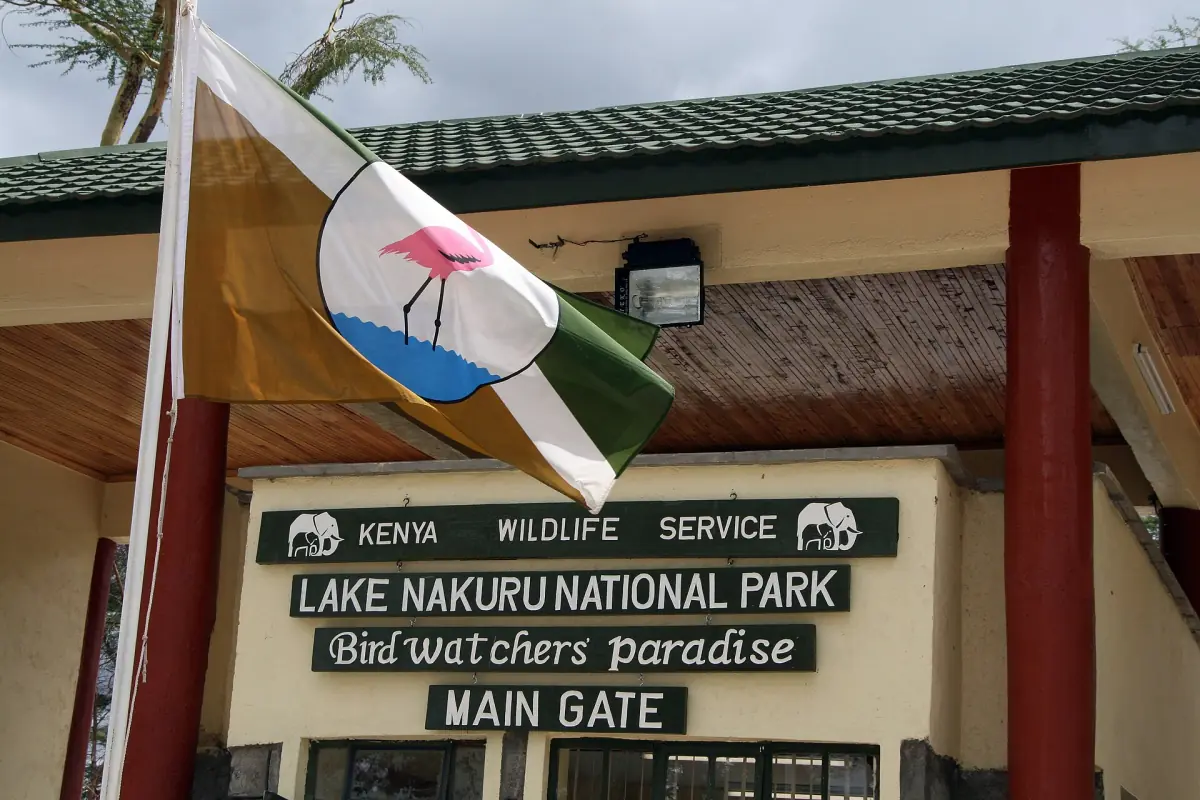
A short history of Lake Nakuru National Park
The story of the park has two halves. The first is about protection: a bird area in 1961, a national park in 1968 and Kenya's first state-managed rhino sanctuary in 1987. The second is about water. Since about 2010 the lake has risen, and that has changed the shore, the roads and the flamingos.
Knowing the dates helps you read what you see on a visit. If you want to see the park yourself, compare Lake Nakuru day trips from Nairobi or read the Lake Nakuru safari guide before you go.
Timeline of the park and the lake
The main dates in order.
| Year | What happened |
|---|---|
| 1961 | A bird protection area is set up in the southern part of the area |
| 1964 | The protected area is extended |
| 1968 | The area is gazetted as a national park, at first about 6,000 ha |
| 1974 | The park is extended again |
| 1986 | An electric fence is installed |
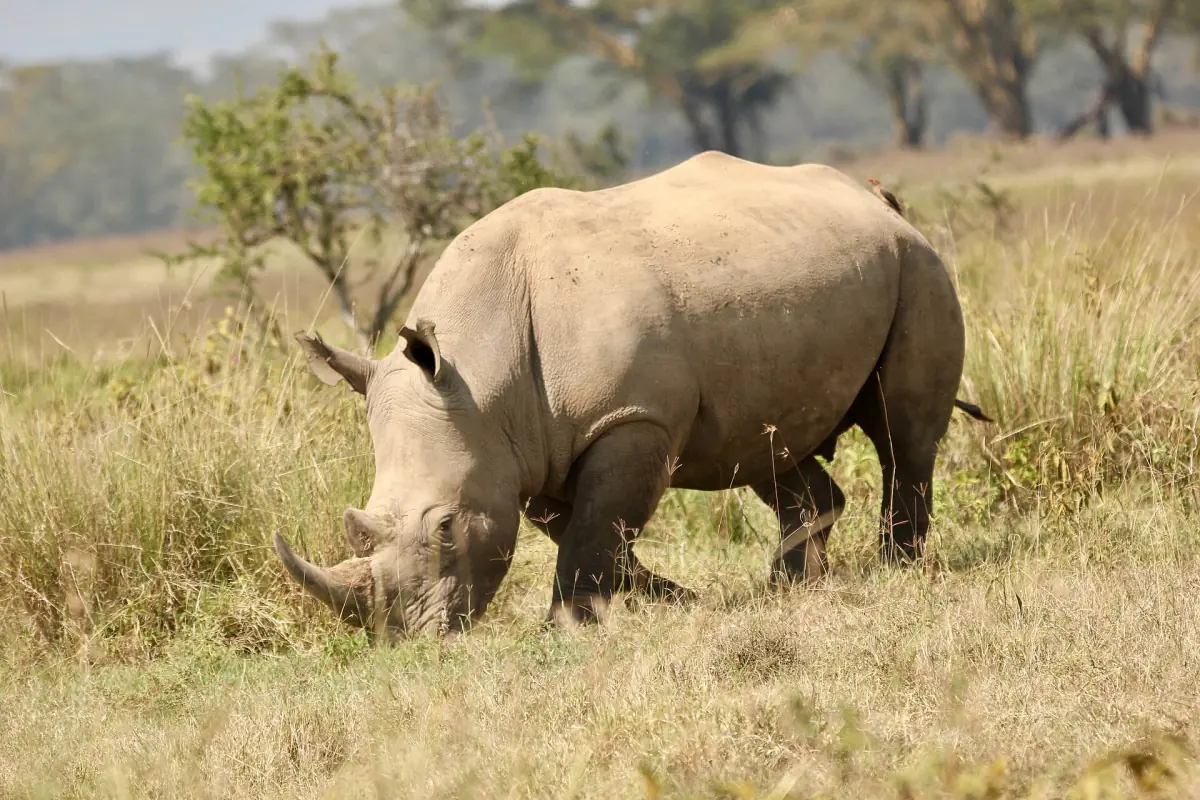
| 1987 | The park becomes Kenya's first state-managed rhino sanctuary |
| 1990 | Lake Nakuru is designated a Ramsar wetland site on 5 June (site no. 476, 18,800 ha) |
| About 2010 | Rising water begins to dilute the lake |
| 2011 | The Kenya Lake System, with Lake Nakuru, Lake Bogoria and Lake Elementaita, joins the UNESCO World Heritage List |
| 2024 | Heavy rain in March and April floods part of the ring road |
The year 1968 is the date for national park status. Do not mix it up with 1986, the year the electric fence went in. For most readers: remember 1968, 1987 and about 2010.
Lake Nakuru tours and day trips
Day trips and safaris to Lake Nakuru National Park, with live prices and availability.
Rising water: the recent chapter
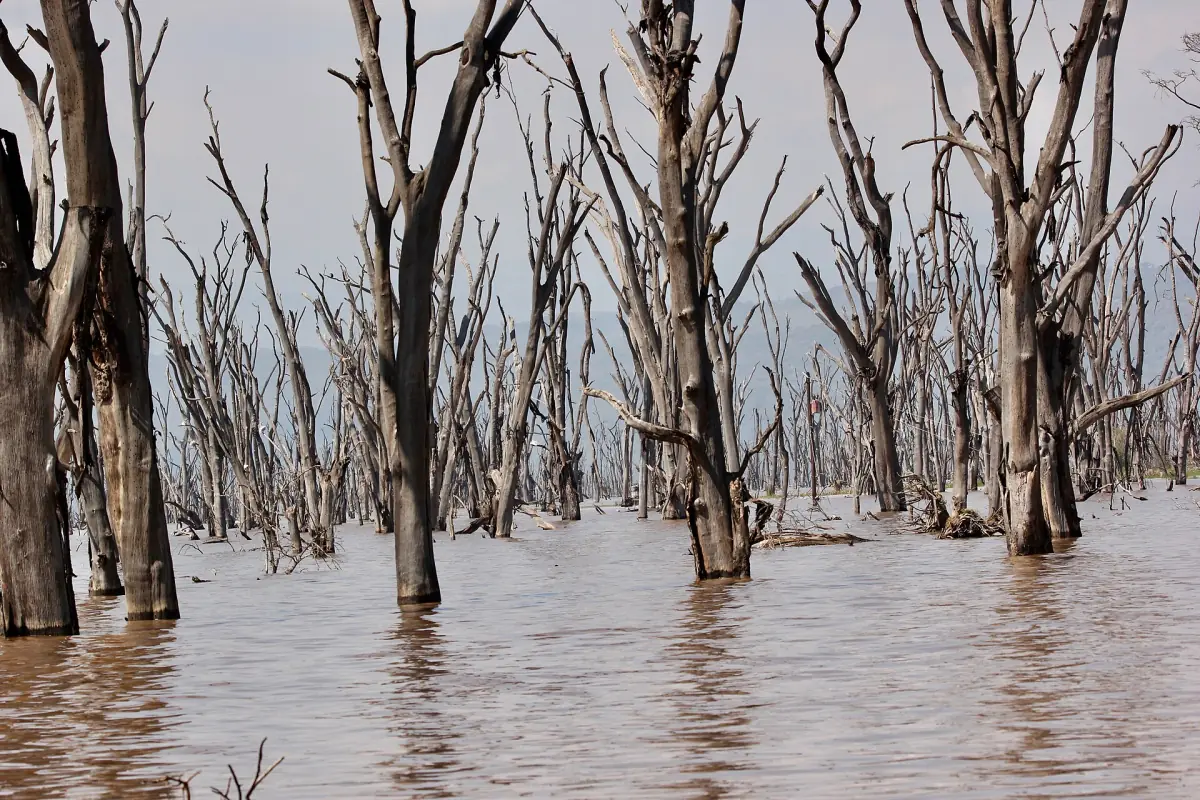
Since about 2010 the water in the lake has been rising. The lake surface is now estimated to be about 70 percent larger than the average from 1984 to 2009. The extra water has diluted the salt and the alkalinity, and that has affected Arthrospira, the food of the lesser flamingo. A count in January 2006 recorded 1,347,063 lesser flamingos, and one in January 2025 about 500. For the details, see Lake Nakuru flamingos.
The water has also reached the roads. After heavy rain in March and April 2024, flooding about 1 km wide covered part of the ring road, and the park was split into an eastern and a western part. That is a record of the damage then, not a list of today's closed roads. Always ask at the gate which tracks are open.
Protected status of the lake
Lake Nakuru carries more than one designation.
National park and rhino sanctuary
The park covers 188 km² and is run by the Kenya Wildlife Service (KWS). The sanctuary status dates from 1987.
Ramsar wetland
Lake Nakuru is Ramsar site no. 476, designated on 5 June 1990, with an area of 18,800 ha.
UNESCO World Heritage
The Kenya Lake System in the Great Rift Valley was inscribed in 2011. The Lake Nakuru component covers 18,800 ha, and the whole listing covers 32,034 ha. These figures describe protected boundaries, not the current water level.
The lake itself
The lake lies at about 1,754 m above sea level. That is a fixed reference figure, not a water-level reading.
What the history means for your visit
Three practical points.
The shoreline moves
Old maps show a different lake. Do not plan routes from them, and ask at the gate which tracks are open. The park has three gates: Main Gate, Lanet Gate and Nderit Gate.
Rhinos come first
The rhino sanctuary is a core part of the park's story. See Lake Nakuru animals for the animals of the park and how to watch well.
Fees and seasons
Check the entry fee before you go, and see Nakuru weather for the rainy seasons.

Lake Nakuru National Park history: frequently asked questions
When did Lake Nakuru become a national park?
The area was gazetted as a national park in 1968, at first about 6,000 ha. A bird protection area had been set up in 1961, and the park was extended in 1964 and 1974.
When did Lake Nakuru become a rhino sanctuary?
In 1987. The Kenya Wildlife Service dates it to that year and calls it the first state-managed rhino sanctuary in Kenya. An electric fence had been installed in 1986.
Why is Lake Nakuru rising?
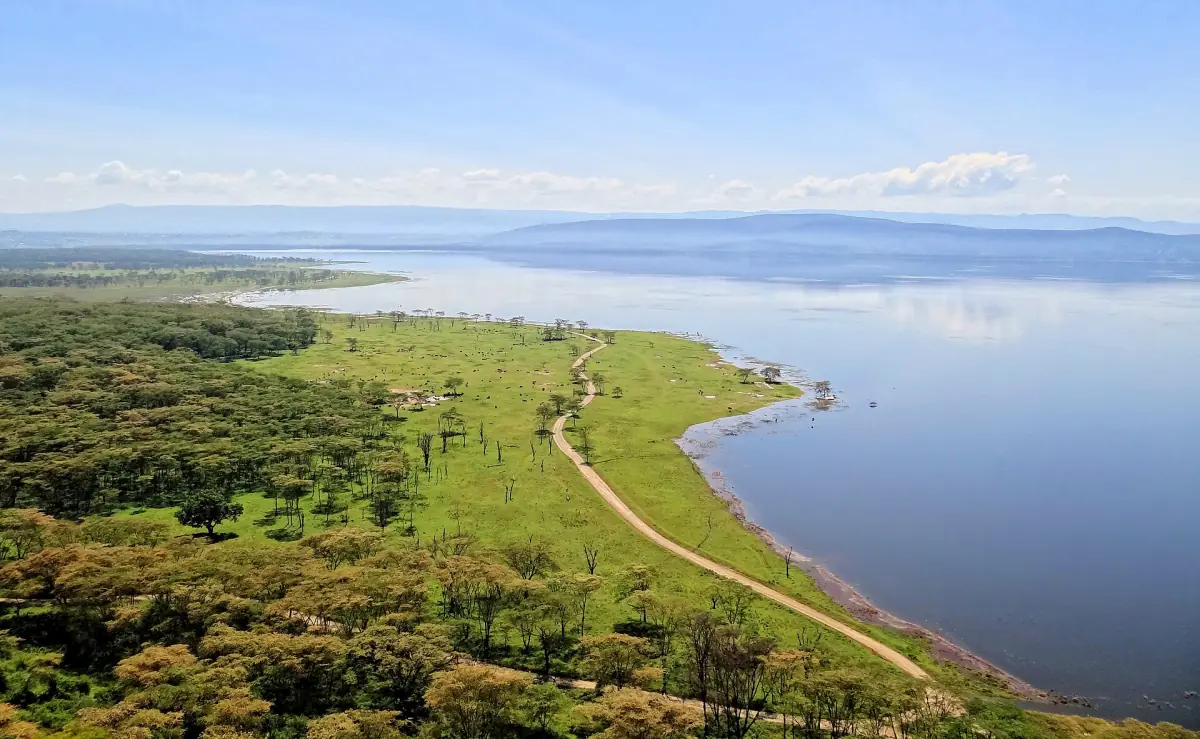
The lake has been rising since about 2010, and its surface is now estimated to be about 70 percent larger than the average from 1984 to 2009. The water has flooded roads inside the park.
Is Lake Nakuru a World Heritage Site?
Yes, as part of the Kenya Lake System in the Great Rift Valley, inscribed in 2011 with Lake Bogoria and Lake Elementaita. Lake Nakuru is also a Ramsar site, designated in 1990.
Can I still drive around the lake?
Do not assume you can. Roads have flooded in the past, and in 2024 the park was split in two when the ring road was under water. Ask at the gate which tracks are open on your day.
Is this the official Lake Nakuru website?
No. This is an independent travel guide. It is not run by the Kenya Wildlife Service or Nakuru County, and it has no connection to any safari operator, lodge or hotel.